Free Muscle Building Program: 5-Day Split Workout (2026 Guide)
- muscle mass
- mass gain
- gym program
- strength training
- split body
- free workout app
- AI workout generator
Stop Doing Random Exercises. Here’s Your Muscle Mass Program.
You want to build serious muscle mass. Not just “tone up.” Not just “get fit.” You want to actually get bigger and stronger.
Here’s the truth: building muscle mass follows a scientific structure. Heavy weights. Split body training. Strategic rest periods. This is the exact algorithm used by WorkoutGen to generate muscle mass programs.
This is that program.
Want this program personalized for you? Generate your free muscle mass program in 60 seconds. No signup required.
The Muscle Mass Training System
Building muscle mass requires high intensity and adequate recovery. That means:
- Heavy loads (75-85% of your max)
- Lower rep ranges (6-10 reps for main lifts)
- Longer rest periods (90-150 seconds)
- Split body format to maximize volume per muscle group
Training Parameters
| Parameter | Beginner | Intermediate | Advanced |
|---|---|---|---|
| Intensity (RM) | 75% | 80% | 85% |
| Main Lifts | 4 × 8 | 3 × 6 | 3 × 6 |
| Secondary Lifts | 4 × 10 | 4 × 8 | 4 × 8 |
| Isolation | 3 × 12 | 3 × 10 | 3 × 10 |
| Rest (main) | 120s | 150s | 150s |
| Rest (secondary) | 90s | 120s | 120s |
| Rest (isolation) | 75s | 90s | 90s |
Real Results: How Tom Built 8kg of Muscle in 16 Weeks
Before we dive into the program, let me share what’s possible. I had a client, Tom, 28 years old, who’d been lifting randomly for years with zero results. Frustrated as hell.
We put him on this exact 5-day split. Here’s what happened:
- Week 4: Clothes fitting tighter (in a good way)
- Week 8: Bench press from 70kg to 85kg
- Week 12: Visible muscle definition, up 5kg bodyweight
- Week 16: Total 8kg muscle gain, squat from 90kg to 115kg
The program works. You just need to show up consistently and follow the progression. No magic, no shortcuts - just systematic training over months.
The 5-Day Split Program
Format: Chest / Back / Legs / Arms / Shoulders Circuit Type: Grouped (complete all sets of one exercise before moving to the next) Sessions per week: 5
Weekly Schedule
| Monday | Tuesday | Wednesday | Thursday | Friday | Saturday | Sunday |
|---|---|---|---|---|---|---|
| Chest | Back | Legs | Arms | Shoulders | Rest | Rest |
Day 1 — Chest
| Exercise | Sets × Reps | Rest | Demo |
|---|---|---|---|
| Bench Press | 4 × 8 | 120s |  |
| Incline Dumbbell Press | 4 × 8 | 120s |  |
| Dumbbell Bench Press | 4 × 10 | 90s |  |
| Machine Chest Fly | 4 × 10 | 90s |  |
| Weighted Dips | 3 × 12 | 75s |  |
| Cable Crossover | 3 × 12 | 75s | 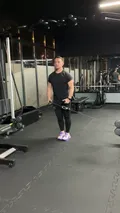 |
Focus: Heavy compound pressing first, then isolation work to maximize chest volume.
Day 2 — Back
| Exercise | Sets × Reps | Rest | Demo |
|---|---|---|---|
| Barbell Deadlift | 4 × 8 | 120s | 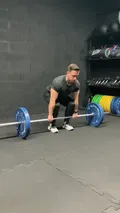 |
| Barbell Row | 4 × 8 | 120s |  |
| Wide-Grip Pull-Up | 4 × 10 | 90s | 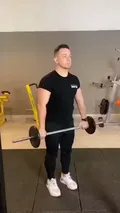 |
| Seated Cable Row | 4 × 10 | 90s |  |
| Lat Pulldown | 3 × 12 | 75s |  |
| Face Pull | 3 × 12 | 75s | 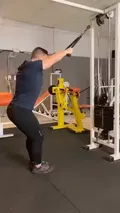 |
Focus: Deadlifts and rows build thickness. Pull-ups and pulldowns build width.
Day 3 — Legs
| Exercise | Sets × Reps | Rest | Demo |
|---|---|---|---|
| Barbell Squat | 4 × 8 | 120s |  |
| Romanian Deadlift | 4 × 8 | 120s |  |
| Leg Press | 4 × 10 | 90s |  |
| Lying Leg Curl | 4 × 10 | 90s |  |
| Hack Squat | 3 × 12 | 75s |  |
| Calf Raises | 3 × 12 | 75s | 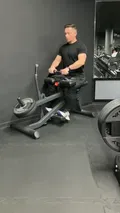 |
Focus: Squats and Romanian deadlifts as foundation. Secondary movements to hit quads, hamstrings, and calves from multiple angles.
Don’t have all this equipment? WorkoutGen adapts this program to your available equipment — dumbbells only, home gym, or full gym.
Day 4 — Arms (Biceps + Triceps)
| Exercise | Sets × Reps | Rest | Demo |
|---|---|---|---|
| Barbell Bicep Curl | 4 × 8 | 120s | 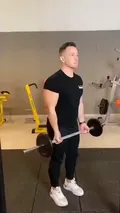 |
| Triceps Rope Pushdown | 4 × 8 | 120s |  |
| Dumbbell Hammer Curl | 4 × 10 | 90s |  |
| Skull Crushers | 4 × 10 | 90s | 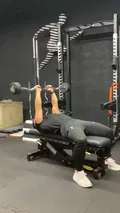 |
| Preacher Curl | 3 × 12 | 75s |  |
| Overhead Triceps Extension | 3 × 12 | 75s |  |
Focus: Alternate biceps and triceps exercises for balanced arm development. Hit both heads of the biceps and all three heads of the triceps.
Day 5 — Shoulders
| Exercise | Sets × Reps | Rest | Demo |
|---|---|---|---|
| Seated Barbell Shoulder Press | 4 × 8 | 120s | 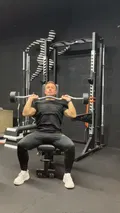 |
| Dumbbell Shoulder Press | 4 × 8 | 120s |  |
| Dumbbell Lateral Raise | 4 × 10 | 90s |  |
| Cable Upright Row | 4 × 10 | 90s | 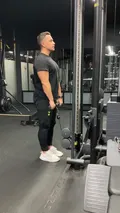 |
| Rear Delt Fly | 3 × 12 | 75s | 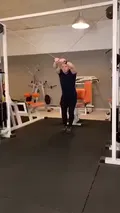 |
| Barbell Shrugs | 3 × 12 | 75s |  |
Focus: Heavy pressing for front delts, lateral raises for width, rear delt work for complete development, and shrugs for traps.
Progressive Overload System
Muscle mass requires progressive overload. Here’s how:
Weekly Progression:
- Week 1: Base weights, focus on form
- Week 2: Add 1 rep to each set
- Week 3: Increase weight by 2.5-5kg
- Week 4: Deload (reduce weight by 20%, same reps)
When to Increase Weight:
- Complete all prescribed reps with good form for 2 consecutive sessions
- Add 2.5kg for upper body lifts
- Add 5kg for lower body lifts
The Secret Sauce: Adaptive Intensity
WorkoutGen uses a Capacity Score system:
- After each session, rate how it felt
- Too easy? Intensity increases (+5%)
- Too hard? Intensity decreases (-2%)
- The asymmetric adjustment prevents you from sandbagging while protecting from overtraining
This creates personalized progressive overload—not arbitrary “add 2.5kg every week” rules that ignore reality.
Start a real strength program free, no email required
Generate a progressive plan with videos and tracking. Train 100% free, and upgrade only if you want real-time AI Coach adaptation.
Start free →Nutrition for Muscle Mass
Training is only half the equation. For muscle mass:
| Factor | Recommendation |
|---|---|
| Calories | Surplus of 300-500 kcal/day |
| Protein | 1.6-2.2g per kg bodyweight |
| Meal Timing | Protein every 3-4 hours |
| Post-Workout | 30-40g protein within 2 hours |
Common Mistakes
Not eating enough. You can’t build a house without bricks. Muscle mass requires a caloric surplus.
Going too light. Mass requires intensity. If you can do 15 reps, the weight is too light for a mass program.
Not resting enough. Between sets: 90-150 seconds minimum. Between sessions for same muscle: 48-72 hours.
Skipping legs. Half your muscle mass potential is below your waist. Don’t ignore it.
Changing exercises constantly. Stick with the same exercises for 8-12 weeks to track progression. Variety comes from intensity, not exercise selection.
Start a real strength program free, no email required
Generate a progressive plan with videos and tracking. Train 100% free, and upgrade only if you want real-time AI Coach adaptation.
Start free →FAQ
How long until I see results?
With proper nutrition and training: noticeable strength gains in 2-4 weeks, visible muscle mass in 8-12 weeks, significant transformation in 6-12 months.
Can I do this program at home?
Partially. You’ll need at minimum: barbell, dumbbells, bench, and pull-up bar. Some exercises can be substituted. WorkoutGen automatically filters exercises based on your available equipment — just select “home gym” or “dumbbells only” and get a customized program.
What if I can only train 3 days per week?
Switch to a Push/Pull/Legs split:
- Day 1: Chest + Shoulders + Triceps
- Day 2: Back + Biceps
- Day 3: Legs
Or let WorkoutGen generate a 3-day program optimized for your schedule.
Should I do cardio?
Minimal for mass gain. If needed for health, limit to 2x per week, 20 minutes, low intensity. Excessive cardio burns calories you need for muscle growth.
How much weight should I start with?
Start with a weight you can lift for 10 reps with good form. For an 8-rep set, that weight will be challenging but doable. Increase from there using the progressive overload system.
What about rest days?
Essential. Muscles grow during rest, not during training. Stick to the schedule: 5 training days, 2 rest days. Sleep 7-9 hours per night.
References
[1] American College of Sports Medicine. “Progression Models in Resistance Training for Healthy Adults.” Medicine & Science in Sports & Exercise, 2009.
[2] Schoenfeld, B.J. et al. “Dose-response relationship between weekly resistance training volume and increases in muscle mass.” Journal of Sports Sciences, 2017.
[3] Rhea, M.R. et al. “A Meta-analysis to Determine the Dose Response for Strength Development.” Medicine & Science in Sports & Exercise, 2003.
[4] Kraemer, W.J. & Ratamess, N.A. “Fundamentals of Resistance Training: Progression and Exercise Prescription.” Medicine & Science in Sports & Exercise, 2004.