Beginner Strength Program: Complete Power Building Guide (2026)
- strength training
- powerlifting
- compound lifts
- strength program
- beginner workout
- free workout app
- AI workout generator
- gym workout
What Is a Strength Training Program?
A strength training program is a structured workout plan designed to increase your maximum force output. Unlike hypertrophy (muscle size) or toning programs, strength training uses heavy weights (80-90% of your max), low repetitions (2-5 reps), and progressive rest periods (2.5-4 minutes, increasing as sets get heavier) to train your nervous system to recruit more muscle fibers and produce more power.
The result: you lift heavier weights, move objects more easily, and build functional power that transfers to real life.
Want to Get Actually Strong? Not Just “Toned”:Strong.
You don’t want to look like you lift. You want to actually be strong. Move heavy things. Feel powerful. Build real, functional strength that matters.
I remember when I first discovered the difference between training for size versus training for strength. I was doing high-rep bodybuilding programs, looking decent, but feeling weak. Then I tried powerlifting-style training - heavy weights, low reps, long rest. My squat jumped 40kg in 6 months. That’s when I understood: strength is a skill, and you train it differently than size.
Here’s what most programs get wrong: too many exercises, too little rest, too light weights. You end up tired but not stronger.
This program is different. It’s built on heavy compound movements with long rest periods:the proven formula for building raw strength. Fewer exercises. Heavier weights. Longer rest. Real results.
This is the exact algorithm WorkoutGen uses to build strength programs. And now it’s yours.
Want this customized to your body? Generate your free personalized strength workout plan in 60 seconds. No signup. No credit card. Just strength.
What You’ll Achieve
Follow this program consistently and here’s what happens:
| Timeline | What Changes |
|---|---|
| Week 2 | Lifts feel smoother:your nervous system is learning |
| Week 4 | You’re adding weight to the bar every session |
| Week 8 | 15-25% stronger on all main lifts |
| Week 12 | You’re lifting weights you once thought impossible |
| Month 6 | You’ve built a foundation of real, lasting strength |
This isn’t hype. It’s what happens when you train with proper intensity, rest, and progression.
Why This Program Works (The Science of Getting Strong)
Strength training is fundamentally different from hypertrophy or toning programs:
- Heavy loads (80-90% of max) → Recruits high-threshold motor units
- Low reps (2-5 per set) → Maximum force production per rep
- Long rest periods (2.5-4 minutes) → Full ATP-PC recovery for next set
- Compound movements only → Multi-joint exercises build functional strength
The result? You get stronger every week:measurable, repeatable progress.
The Numbers Behind Strength Training
| What You’ll Do | Beginner | Intermediate | Advanced |
|---|---|---|---|
| Intensity (RM) | 80% | 85% | 90% |
| Main exercises | 4 sets (pyramid) | 4 sets (pyramid) | 4 sets (pyramid) |
| Main rep scheme | 5 → 4 → 3 → 2 | 5 → 4 → 3 → 2 | 5 → 4 → 3 → 2 |
| Main rest (progressive) | 150s → 180s → 210s → 240s | 150s → 180s → 210s → 240s | 150s → 180s → 210s → 240s |
| Accessory exercises | 2 sets each | 2 sets each | 2 sets each |
| Accessory rep scheme | 8 reps → 6 reps | 8 reps → 6 reps | 8 reps → 6 reps |
| Accessory rest | 90s → 120s | 90s → 120s | 90s → 120s |
| Rest between exercises | 150s | 180s | 210s |
| Session duration | ~50 min | ~55 min | ~60 min |
Translation: Heavy weights, few reps, long rest that increases as you lift heavier. This is how strength is built.
How to Know If You’re Using the Right Weight (RPE Guide)
You might wonder: “How do I know if I’m at 80% of my max?”
Use RPE (Rate of Perceived Exertion):
| RPE | What It Feels Like | Reps Left in Tank |
|---|---|---|
| 7 | Challenging but controlled | 3 reps left |
| 8 | Hard, form starts to slow | 2 reps left |
| 9 | Very hard, maybe 1 more | 1 rep left |
| 10 | Maximum effort, nothing left | 0 reps left |
For this program: Your working sets should feel like RPE 8-9. If you could easily do 3+ more reps, the weight is too light.
Your Weekly Game Plan
Three days per week. That’s optimal for strength:your nervous system needs recovery.
| Monday | Tuesday | Wednesday | Thursday | Friday | Saturday | Sunday |
|---|---|---|---|---|---|---|
| Push Day | Rest & recover | Pull Day | Rest & recover | Leg Day | Rest | Rest |
The rest days aren’t optional. Strength adaptations happen during recovery, not during training.
Before You Start: 10-Minute Warm-Up (Don’t Skip This)
Heavy lifting on cold muscles is how injuries happen. Every single session starts here.
| Move | Time | Why It Matters |
|---|---|---|
| Light cardio (rowing or cycling) | 3 min | Raises core temperature, gets blood flowing |
| Arm circles + shoulder dislocates | 1 min | Prepares shoulders for heavy pressing |
| Hip circles + leg swings | 1 min | Opens hip flexors for squats and deadlifts |
| Goblet squats (light weight) | 10 reps | Activates lower body movement patterns |
| Push-ups | 10 reps | Warms up pressing muscles and core |
| Warm-up sets (50%, then 70% of working weight) | 2 sets | Primes nervous system for heavy work |
The warm-up sets are crucial. Before your first heavy lift, do:
- Set 1: 50% of working weight × 5 easy reps
- Set 2: 70% of working weight × 3 reps
Then you’re ready for your working sets.
Session 1: Push Day (Chest, Shoulders, Triceps)
The goal: Build pressing strength with heavy compound movements.
Complete all 4 sets of each main exercise before moving to the next. Rest increases with each set (150s → 180s → 210s → 240s) as intensity rises.
| Exercise | Sets × Reps | Rest | Demo |
|---|---|---|---|
| Bench Press | 5 → 4 → 3 → 2 | 150s → 180s → 210s → 240s |  |
| Seated Barbell Shoulder Press | 5 → 4 → 3 → 2 | 150s → 180s → 210s → 240s |  |
| Triceps Rope Pushdown | 1 × 8 + 1 × 6 | 90s / 120s |  |
| Dips (Bodyweight) | 1 × 8 + 1 × 6 | 90s / 120s |  |
The pyramid rep scheme (5 → 4 → 3 → 2): Start with 5 reps at your lightest working weight (rest 150s), add weight and do 4 reps (rest 180s), add more weight for 3 reps (rest 210s), finish with your heaviest set for 2 reps (rest 240s). The rest increases as intensity increases:this is how the WorkoutGen algorithm maximizes strength gains.
Bench Press Form Cues
- Plant feet flat, squeeze shoulder blades together
- Lower bar to mid-chest with elbows at ~45° angle
- Drive through feet as you press up
- Bar path: slight diagonal from chest to over shoulders
Session 2: Pull Day (Back, Biceps)
The goal: Build pulling strength through heavy rows and deadlifts.
| Exercise | Sets × Reps | Rest | Demo |
|---|---|---|---|
| Barbell Deadlift | 5 → 4 → 3 → 2 | 150s → 180s → 210s → 240s |  |
| Barbell Bent-Over Row | 5 → 4 → 3 → 2 | 150s → 180s → 210s → 240s |  |
| Pull-Up (Assisted if needed) | 1 × 8 + 1 × 6 | 90s / 120s | 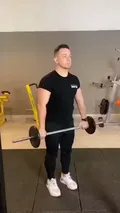 |
| Barbell Bicep Curl | 1 × 8 + 1 × 6 | 90s / 120s | 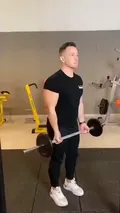 |
Deadlift tip: Take extra rest after deadlifts (3+ minutes). They demand more nervous system recovery than any other exercise.
Deadlift Form Cues
- Bar over mid-foot, shins nearly touching bar
- Hinge at hips, grip just outside knees
- Chest up, back flat (neutral spine)
- Push the floor away, keep bar close to body
- Stand tall at top, squeeze glutes:don’t hyperextend
Session 3: Leg Day (Quads, Glutes, Hamstrings)
The goal: Build lower body strength:the foundation of total body power.
| Exercise | Sets × Reps | Rest | Demo |
|---|---|---|---|
| Barbell Back Squat | 5 → 4 → 3 → 2 | 150s → 180s → 210s → 240s |  |
| Romanian Deadlift | 5 → 4 → 3 → 2 | 150s → 180s → 210s → 240s |  |
| Leg Press | 1 × 8 + 1 × 6 | 90s / 120s |  |
| Lying Leg Curl | 1 × 8 + 1 × 6 | 90s / 120s |  |
Squat Form Cues
- Feet shoulder-width apart, toes slightly out
- Break at hips and knees together
- Knees track over toes (don’t cave in)
- Depth: hip crease below knee (at minimum)
- Drive through whole foot, not just toes
Your legs are half your body. Skip them and you’ll never reach your strength potential.
No barbell? WorkoutGen adapts this program to your available equipment:dumbbells only, home gym, or full gym.
After Every Session: 5-Minute Cool-Down
Heavy lifting compresses your spine and tightens your muscles. Stretch to recover faster.
| Stretch | Time | What It Does |
|---|---|---|
| Hanging from pull-up bar | 30s | Decompresses spine after heavy loading |
| Quad Stretch (standing) | 30s each leg | Releases tight quads from squats |
| Piriformis Stretch | 30s each side | Opens hips after lower body work |
| Chest Doorway Stretch | 30s | Counteracts pressing tightness |
| Cat-Cow | 60s | Mobilizes spine |
| Deep Breathing | 60s | Activates recovery mode |
How to Progress: Sample 8-Week Strength Journey
Here’s exactly how progression looks for a beginner on the Bench Press:
| Week | Working Weight | Sets × Reps | Notes |
|---|---|---|---|
| 1 | 50 kg | 5-4-3-2 | Focus on form, learn the pattern |
| 2 | 50 kg | 5-4-3-2 | Smoother, more confident |
| 3 | 52.5 kg | 5-4-3-2 | First weight increase |
| 4 | 52.5 kg | 5-4-3-2 | Solidify new weight |
| 5 | 55 kg | 5-4-3-2 | Another jump |
| 6 | 55 kg | 5-4-3-2 | Getting comfortable |
| 7 | Deload: 45 kg | 5-4-3-2 | Recovery week |
| 8 | 57.5 kg | 5-4-3-2 | Post-deload PR |
Rules for adding weight:
- Complete all prescribed reps with good form for 2 sessions in a row
- Add 2.5 kg for upper body lifts
- Add 5 kg for lower body lifts
- If you fail a rep or form breaks down, stay at that weight
Track everything. Use a notebook or app. Write down every weight, every rep. You can’t manage what you don’t measure.
When You’re Ready for Intermediate
You’ve outgrown this program when:
- You’ve been training consistently for 4-6 months
- Your main lifts have plateaued for 3+ weeks despite good recovery
- You can squat 1.25× bodyweight, bench 0.85× bodyweight, deadlift 1.5× bodyweight
- You’re no longer seeing weekly strength gains
At that point, you’ll need periodization, varied rep ranges, and more volume. But don’t rush it:beginners make the fastest gains with simple programming.
Why WorkoutGen Does This Better
Here’s what most strength apps miss: your recovery capacity isn’t the same as everyone else’s.
WorkoutGen uses a Capacity Score that adapts to YOU:
- Felt too easy? Next session is heavier
- Struggling to recover? We add more rest time
- The system learns. You just show up and lift.
This isn’t generic programming. It’s a strength program that evolves with you.
Start a real strength program free, no email required
Generate a progressive plan with videos and tracking. Train 100% free, and upgrade only if you want real-time AI Coach adaptation.
Start free →Nutrition for Strength
Strength requires fuel. Here’s what you need:
| Factor | Keep It Simple |
|---|---|
| Calories | Eat at maintenance or slight surplus (+200-300 kcal) |
| Protein | 1.6-2.2g per kg bodyweight daily |
| Pre-workout | Carbs + protein 2-3 hours before lifting |
| Post-workout | 30-40g protein within 2 hours |
| Sleep | 7-9 hours (non-negotiable for neural recovery) |
| Hydration | 3+ liters water daily |
Strength is built in the gym and recovered in the kitchen and bed.
Mistakes That Kill Your Strength Gains
“I’ll just do more volume.” Wrong. Strength is about intensity, not volume. 4 heavy sets beat 12 light sets every time.
“I’ll cut rest short to save time.” Your ATP-PC system needs 2-3 minutes to fully recover. Short rest = weak lifts = no progress.
“I’ll skip the warm-up sets.” Cold muscles don’t fire efficiently. Warm-up sets prime your nervous system for heavy work.
“I’ll change exercises every week.” Strength requires motor learning. Stick with the same movements for 8-12 weeks minimum.
“I’ll train through minor pain.” Pain is a signal. Ignore it and minor issues become major injuries. Take the extra rest day.
“I’ll add weight even with bad form.” Ego lifting leads to injury and plateaus. Perfect reps build strength. Sloppy reps build nothing.
Start a real strength program free, no email required
Generate a progressive plan with videos and tracking. Train 100% free, and upgrade only if you want real-time AI Coach adaptation.
Start free →Your Questions, Answered
What is the best strength training program for beginners?
The best beginner strength program focuses on compound barbell movements (squat, bench, deadlift, overhead press, row), uses heavy weights with low reps (2-5 reps at 80%+ intensity), and includes progressive rest (2.5-4 minutes between sets, increasing as weight goes up). This program follows the exact algorithm WorkoutGen uses for strength training.
When will I see strength gains?
Week 1-2: Neurological adaptations:you’ll lift more with the same muscle mass. Week 4-6: Consistent PRs on major lifts. Week 8-12: Significant strength increases (20-30% on main lifts for beginners). Month 4+: You’ll be lifting weights you thought were impossible.
Can I do this strength workout at home?
Partially. You need at minimum:
- Barbell and weight plates (ideally Olympic)
- Squat rack or power cage
- Bench
Some exercises can be substituted with dumbbells, but barbell training is optimal for powerlifting and strength development.
What if I can only train twice a week?
You’ll still progress:just slower. Combine sessions:
- Day 1: Squat + Bench + Row
- Day 2: Deadlift + Overhead Press + Pull-up
Or let WorkoutGen optimize a 2-day strength plan for you.
Should I do cardio on a strength program?
Minimal. For strength, excessive cardio interferes with recovery. If needed for health, limit to:
- 2x per week maximum
- Low intensity (walking, light cycling)
- After lifting, never before
What’s the difference between strength training and hypertrophy?
Strength program: 2-5 reps, 80-90% intensity, 2-4 min rest → Builds maximum force production
Hypertrophy program: 8-12 reps, 65-75% intensity, 60-90s rest → Builds muscle size
Both make you stronger. Strength training focuses on neural efficiency. Hypertrophy focuses on muscle growth.
How much rest between sessions for the same muscle?
72 hours minimum. That’s why this is a 3-day program with rest days between. Your nervous system needs time to recover from heavy lifting.
How do I know if I’m lifting heavy enough?
Use the RPE scale. Your working sets should feel like RPE 8-9 (1-2 reps left in the tank). If you could easily do 3+ more reps, increase the weight.
The Science (For the Curious)
This isn’t bro-science. It’s backed by peer-reviewed research:
[1] American College of Sports Medicine. “Progression Models in Resistance Training for Healthy Adults.” Medicine & Science in Sports & Exercise, 2009.
[2] Schoenfeld, B.J. et al. “Strength and Hypertrophy Adaptations Between Low- vs. High-Load Resistance Training.” Journal of Strength and Conditioning Research, 2017.
[3] Grgic, J. et al. “Effect of Resistance Training Frequency on Gains in Muscular Strength.” Sports Medicine, 2018.
[4] de Salles, B.F. et al. “Rest interval between sets in strength training.” Sports Medicine, 2009.
Start Lifting Heavy. Today.
You’ve read this far. That means you’re serious about getting strong.
Don’t let this be another article you bookmark and forget. Pick a day. Load the bar. Do Session 1. Feel the difference.
In 8 weeks, you’ll be lifting weights you thought were impossible.